

Document Control in Project Management: Why It Is Essential
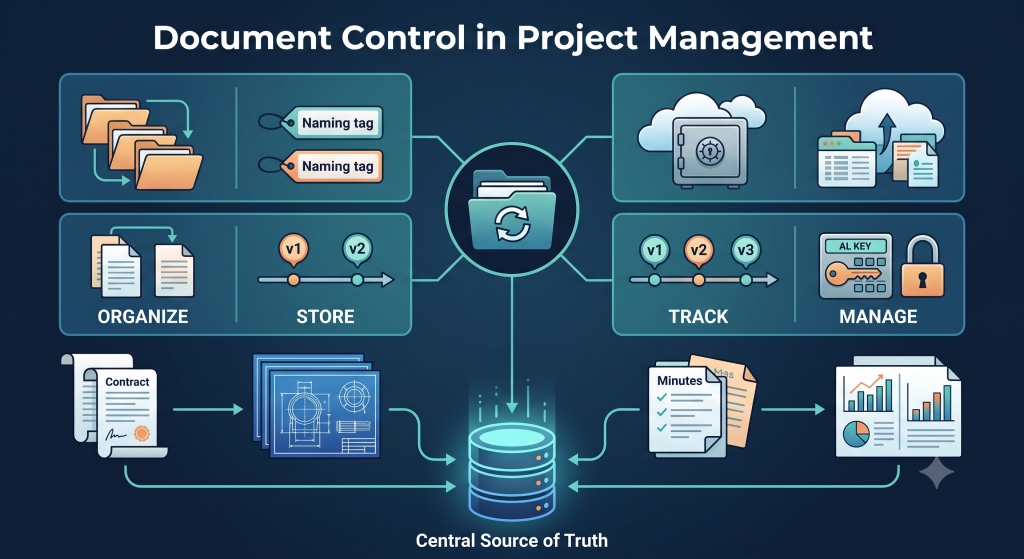
Document Control in Project Management is the structured process of organizing, storing, tracking, and managing every document that supports a project. From contracts and blueprints to meeting notes and progress reports, every file needs a clear home, a clear owner, and a clear version history. Without a strong system in place, teams waste valuable hours searching for information, reviewing outdated versions, or recreating work that already exists. The cost of that chaos shows up in missed deadlines, duplicate efforts, and frustrated stakeholders who lose trust in the process.
For modern teams handling several projects at once, document chaos quickly becomes a silent drain on productivity. A single misplaced approval or outdated version can trigger delays, budget overruns, and even compliance penalties. That is why experienced project leaders now treat document management as a core operational discipline, not a back-office chore hidden under spreadsheets and shared folders.
What Does Document Control in Project Management Actually Cover?
Document control goes far beyond saving files on a shared drive. It manages the full lifecycle of every project document, from creation to controlled disposal. Core activities include standardized naming, version tracking, approval workflows, secure storage, archiving, audit trails, and access control. Each activity works together so that the right person always sees the right version of the right file at the right time.
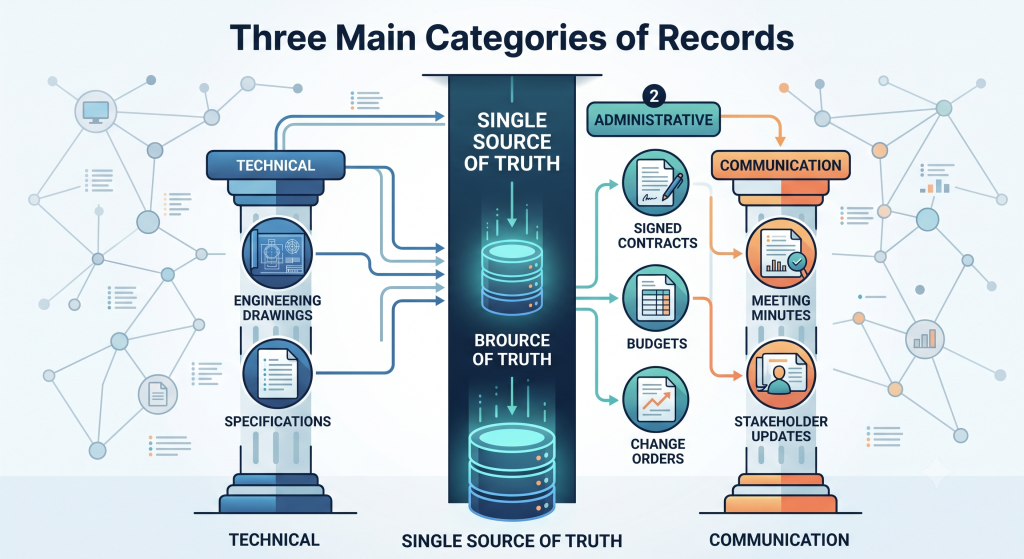
Most projects generate three main categories of records that demand careful control:
- Technical documents, such as engineering drawings, design specifications, and test results
- Administrative records, including signed contracts, budgets, change orders, and procurement files
- Communication records, such as meeting minutes, email decisions, and stakeholder updates
When teams manage all three categories under a unified system, they build a single reliable source of truth. That clarity removes guesswork, reduces cross-team miscommunication, and shortens review cycles across every phase of the project.
Why Document Control in Project Management Drives Real Results
Strong document control delivers measurable benefits that directly improve project outcomes. It strengthens accountability because every revision links to a specific person and a precise timestamp. It shortens approval cycles by routing files to the correct reviewers automatically. It also protects companies during audits by producing complete, traceable records on demand, rather than forcing staff to dig through scattered folders.
Beyond compliance, teams with mature document practices experience far fewer rework loops. Designers stop editing outdated drawings. Project managers stop chasing missing signatures. Clients receive consistent, accurate updates throughout the project. The entire organization moves with greater speed, transparency, and confidence.
Common Risks of Weak Document Control
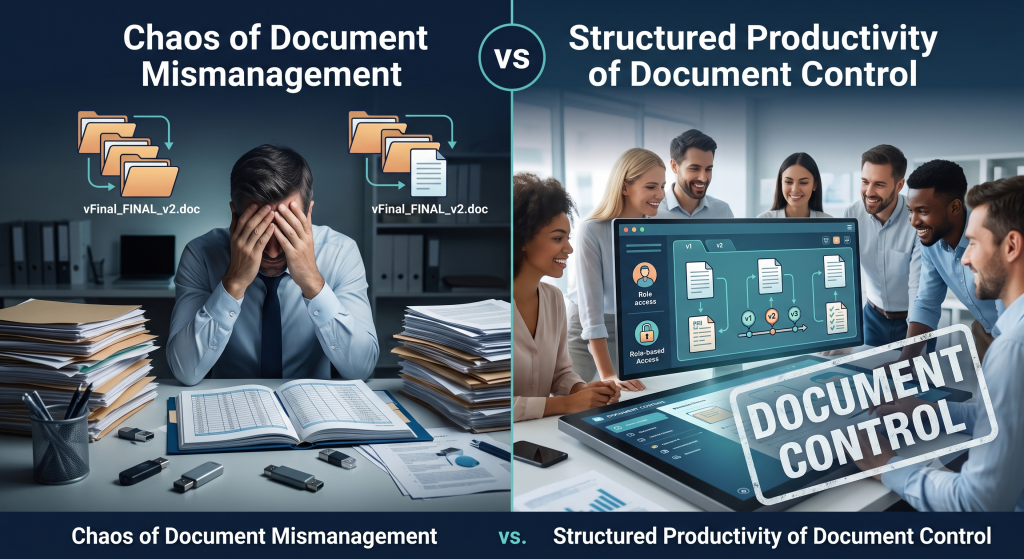
When document control is weak or inconsistent, warning signs appear quickly across the project. Teams rely on personal folders, file names get duplicated, and version confusion becomes daily noise. More seriously, decisions get made based on outdated information, which can quietly compromise safety, quality, and finances long before anyone notices the source of the problem.
Highly regulated industries face particularly high stakes. Construction, engineering, pharmaceuticals, energy, and IT projects all rely on traceable, accurate documentation. A single untracked revision in a regulated environment can trigger failed inspections, contract disputes, or even legal liability. Investing in disciplined Document Control in Project Management is far cheaper than recovering from such incidents after they occur.
Best Practices for Effective Document Control
Any team can strengthen its document control by adopting a few proven habits from the start:
- Establish a clear naming convention and folder structure from day one
- Use a centralized platform with role-based access and automatic version history
- Define approval workflows in writing before the project begins
- Lock outdated versions and clearly label them as superseded
- Schedule regular audits to remove duplicate and obsolete files
- Train every team member, including subcontractors, on the same standards
Modern digital tools, including cloud storage, project management software, and dedicated document control platforms, make these practices easier to scale across global teams. The real key to success is consistent daily discipline, not the complexity of the chosen tool.
Conclusion
Document Control in Project Management is far more than optional paperwork. It acts as the nervous system that keeps every project healthy, transparent, and on schedule. Teams that treat documentation as a strategic asset deliver stronger results, pass audits with confidence, and adapt faster whenever scope, design, or conditions change unexpectedly.
If your current document practices feel scattered or reactive, do not wait for a crisis. Start small by mapping one process, applying a clear naming structure, and centralizing storage in one accessible system. Over time, those small improvements compound into stronger projects and stronger teams. Begin strengthening your document control today and turn scattered information into a genuine competitive advantage.